200 KLD STP Price - MBBR
200 KLD Sewage Treatment Plant – MBBR Technology
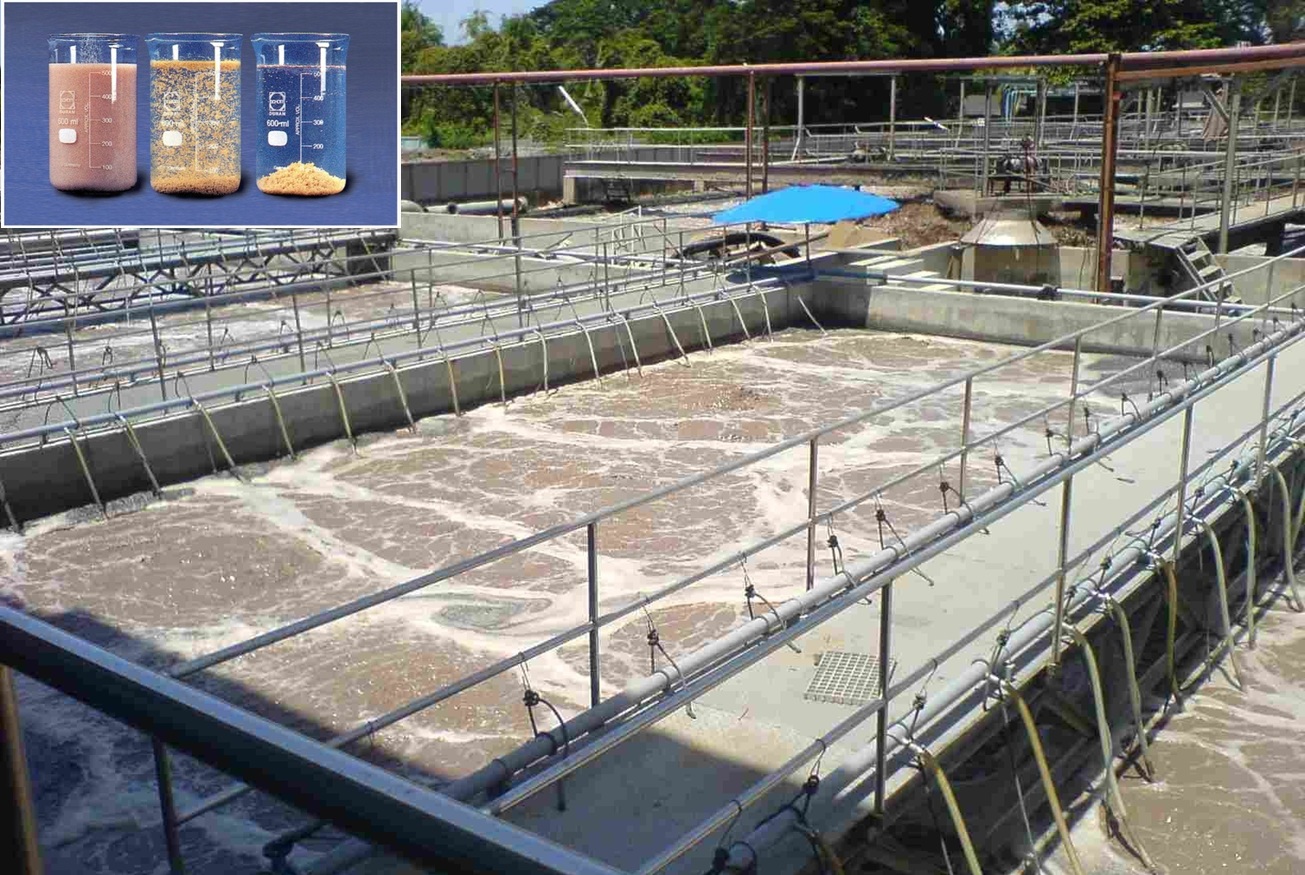
MBBR is an advanced attached-growth biological process using floating bio-media to increase active surface area and reduce tank size.
This page provides an indicative 200 KLD MBBR design: process flow, media specs, careful calculations (digit-by-digit), equipment list, O&M notes and reuse guidance. Final design will be confirmed after site visit & jar test.
Process Flow (MBBR)
Return activated sludge (RAS) pumped back to reactor; excess sludge → sludge holding & dewatering. MBBR media reduces footprint but requires mixing & scouring air.
Design Basis & Mass Calculations (digit-by-digit)
Design daily flow (Qd) = 200,000 L/day (200 KLD).
Operating hours = 20 hours/day.
Design hourly flow (Qh) = Qd / hours = 200,000 / 20 = 10,000 L/h.
Influent BOD (assumed) = 300 mg/L (0.300 g/L).
Target BOD removal = 80% (indicative).
Step-by-step BOD & O₂ calculations
Influent BOD = 300 mg/L = 0.300 g/L.
BOD mass/day = 200,000 L × 300 mg/L = 200,000 × 300 mg = 60,000,000 mg = 60,000 g = 60.000 kg/day.
2) BOD removed (80%)
Removed BOD = 60.000 kg/day × 0.80 = 48.000 kg/day.
3) Oxygen demand (1.5 kg O₂ per kg BOD removed)
O₂ required = 48.000 kg/day × 1.5 = 72.000 kg O₂/day.
4) Air required (using 0.278 kg O₂ per m³ air and 10% transfer efficiency)
Available O₂ per m³ air = 0.278 kg × 0.10 = 0.0278 kg O₂/m³ air.
Air (m³/day) = 72.000 kg / 0.0278 kg/m³ = 72.000 / 0.0278 ≈ 2,590.650 m³/day.
Air (m³/hour) = 2,590.650 / 20 = 129.533 m³/hr.
Recommendation: Provide blowers totalling ~ 150–200 m³/hr (split across 2 blowers for duty + standby) to allow margin for media mixing & scouring.
Tank Sizing & Volumes (Indicative)
Design hourly flow = 10,000 L/h. We use conservative HRTs; values rounded for practical tank sizes.
| Unit | HRT / Note | Calculated Volume (L) | Rounded (m³) |
|---|---|---|---|
| Collection / Equalization Tank (disc diffusers) | 6 hours | 10,000 × 6 = 60,000 L | 60 m³ |
| Bar screen & O&G chamber | 0.5–1 hour | ~10,000 L | 10 m³ |
| MBBR Aeration Tank (required water volume) | 6 hours (required free water) | 10,000 × 6 = 60,000 L | 60 m³ (free water) |
| Secondary Clarifier | 2 hours | 10,000 × 2 = 20,000 L | 20 m³ |
| Clarified Water / Buffer Tank (PSF feed) | Buffer | ~3,000 – 5,000 L | 3 – 5 m³ |
| Final Treated Water Tank | Reuse buffer | ~10,000 L | 10 m³ |
| Sludge holding / Thickener | Intermediate | ~2,000 – 4,000 L | 2 – 4 m³ |
Important note on media fill and physical reactor volume:
The **60 m³** above is the required *free water volume* for biological HRT (6 hr). MBBR uses floating media which occupies part of the aeration tank volume — therefore the **physical** aeration tank volume must be increased to provide the required free water volume.
Worked example — media fill effect (digit-by-digit)
Let media filling ratio f = 55% → media occupies 0.55 of tank volume.
Free water fraction = 1 − f = 0.45.
Physical tank volume V needed such that free water = 0.45 × V = 60 m³.
=> V = 60 / 0.45 = 133.333... m³ ≈ 133.3 m³ physical aeration tank.
If f = 60% (0.60), free fraction = 0.40 → V = 60 / 0.40 = 150 m³ physical.
If f = 50% (0.50), free fraction = 0.50 → V = 60 / 0.50 = 120 m³ physical.
Design guidance: choosing media fill 50–55% is common to balance footprint & hydraulic free volume. For 55% fill we recommend a physical aeration tank ≈ 133 m³. This increases civil footprint versus simple ASP but gains performance & resilience. We will finalize fill% and physical volumes after jar test & site constraints.
MBBR Media Specification & Filling
| Property | Value / Note |
|---|---|
| Media Type | PP / HDPE Floating Bio-carrier (virgin material) |
| Surface Area | 500 – 650 m² / m³ (typical; vendor dependent) |
| Filling Ratio (recommended) | 55% of aeration tank volume (adjustable 50–65% based on load) |
| Media Movement | Free-moving carriers; check for carry-over protection at clarifier outlet |
| Advantage | Higher biofilm surface area → compact reactor & stable performance |
Exact carrier type & fill percent will be specified after influent characterization and vendor selection.
Air / Blower & Power Estimates
Blower motor power depends on blower type, discharge pressure & piping losses. Typical combined blower motor range: 15 – 40 HP for this capacity (vendor dependent).
Expected Performance & Reuse
| Parameter | Influent (Design) | Expected Treated (After PSF+ACF+Disinfection) |
|---|---|---|
| pH | 6.5 – 7.5 | 6.5 – 7.5 |
| BOD | ~300 mg/L | < 30 mg/L |
| COD | ~900 mg/L | < 200 mg/L (site dependent) |
| TSS | ~150 mg/L | < 30 mg/L |
| Oil & Grease | ~50 mg/L | < 5 mg/L |
Typical reuse: gardening, toilet flushing, car wash, pavement wash. For critical reuse (RO feed/cooling towers) include UF/RO & perform lab validation.
Operation & Maintenance (Key Points)
- Maintain DO in reactor: 2.0 – 3.5 mg/L (increase as needed for media scouring).
- Monitor biofilm & MLSS; control wasting to maintain appropriate solids.
- Inspect media movement & prevent carrier carryover (screens at clarifier outlet).
- Blower and diffuser maintenance; spare diffusers & blower spare parts recommended.
- Keep records for TNPCB/CPCB compliance; schedule periodic performance checks.
Get Quick Quotation / Technical Proposal
Free site visit & jar test for final design & price. Send site photos, sample report (if available) and project brief.
Sales / Technical: +91 97100 35249 • Service: +91 99623 95875 • Email: rrrenviro@gmail.com