Hospital Wastewater Treatment Plant (MBBR + UF) — 50 KLD
Why a dedicated Hospital ETP?
Hospital wastewater contains infectious agents, pharmaceuticals, disinfectants, high BOD/COD from food & laundry, and variable load spikes (OT, dialysis, labs). MBBR + UF gives robust biological removal with compact footprint and UF ensures pathogen barrier & solids-free polishing before disinfection using Sodium Hypochlorite.
Overview — 50 KLD Hospital ETP (MBBR + UF)
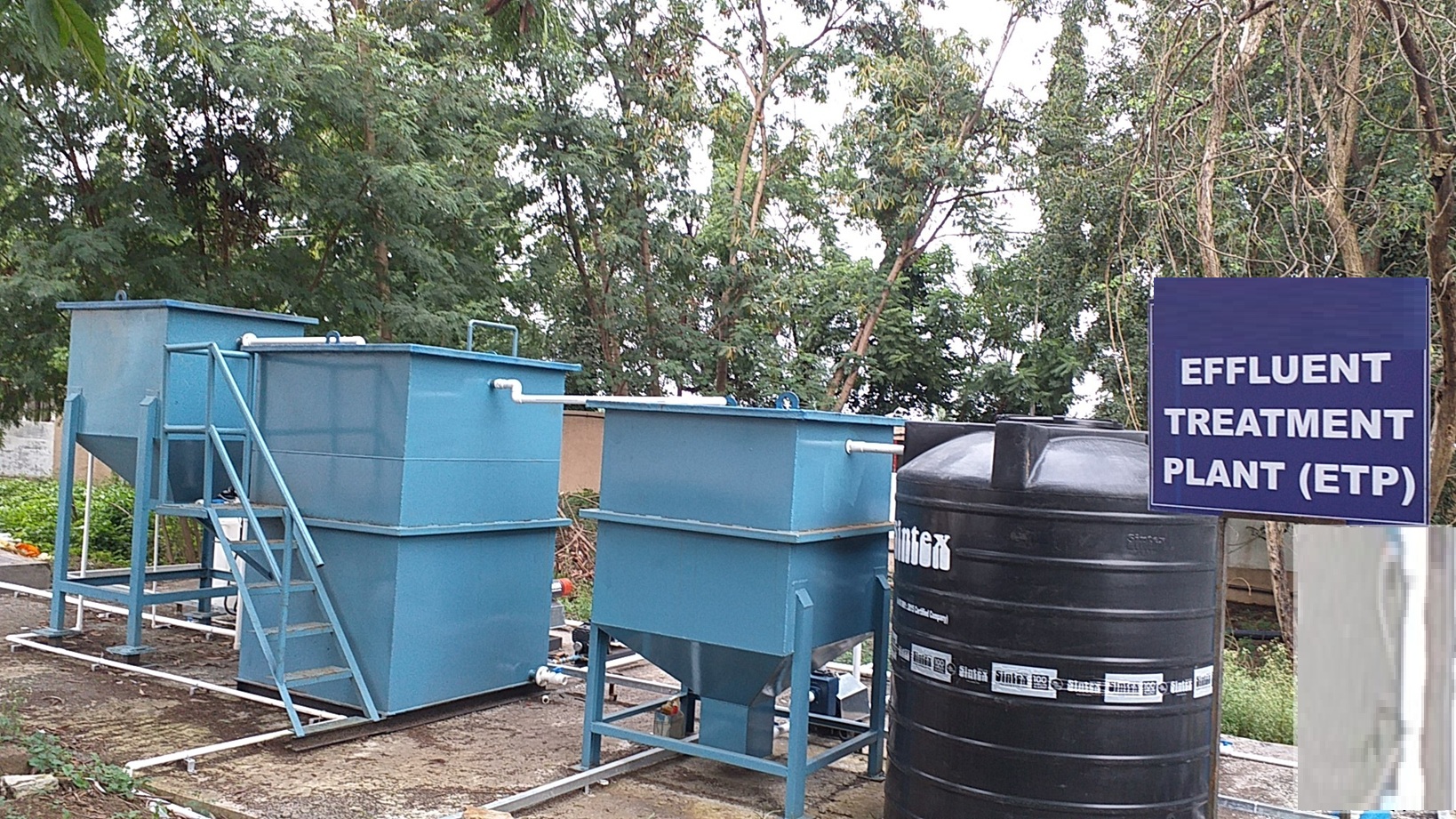
This packaged design handles sewage, laundry wastewater, kitchen effluent, minor pharmaceutical rinse water and dialysis rejects. Key features: source segregation, equalization, MBBR biological reactors for BOD/COD & nitrification, tube-settler / clarifier, UF polishing to remove pathogens & suspended solids, final sodium hypochlorite disinfection and sludge dewatering.
Design finalised after site visit & sample analysis (BOD, COD, TSS, pathogens, pharmaceutical markers, TDS).
Placeholder
Placeholder
Placeholder
Recommended Process Flow
UF is selected for its reliable removal of bacteria, viruses and suspended solids — critical for hospital discharge or reuse (non-product contact). Final residual chlorine is controlled by dosing and monitoring.
Technical Specifications — 50 KLD Example
| Parameter | Value / Note |
|---|---|
| Design Flow | 50 KLD (hospital campus, multi-wards & labs) |
| Typical Influent | pH 5–9, BOD 300–3000 mg/L (varies), COD 800–6000 mg/L, TSS 100–1500 mg/L, pharmaceutical traces present |
| Primary Treatment | Coarse screening, grit removal, equalization & DAF/FOG trap for kitchen streams |
| Biological | MBBR with bio-media carriers; designed for nitrification & organic removal |
| Polishing | Ultrafiltration (UF) membrane skid — 0.01–0.1 µm range (module dependent) |
| Disinfection | Sodium Hypochlorite (NaOCl) dosing — controlled residual (as per consent) |
| Sludge Handling | Thickener + Filter Press or Belt Press; infectious sludge managed per biomedical waste rules |
| Automation | PLC with pH, DO, level sensors, chlorine residual monitor (optional) |
| Power & Utilities | Estimated package electrical 8–20 kW (blower + pumps + UF) — final after detailed design |
Note: For pharmaceutical-high effluents or cytotoxic wastes, additional AOP (UV/H₂O₂ / Ozone) or segregated pre-treatment is recommended prior to biological stage.
Common Chemicals & Purpose (Indicative)
- Sodium Hypochlorite (NaOCl) — Final disinfection. Typical dosing: 1–5 mg/L free chlorine (site dependent).
- Coagulants: PAC / FeCl₃ — Colour & TSS removal in primary stage. Dosing by jar tests (5–50 mg/L typical).
- Polymers (Cationic/Anionic) — Flocculation & sludge dewatering aid. Dosing 0.1–5 mg/L (typical).
- De-chlorination (SMBS) — If UF/RO requires zero chlorine before membrane contact.
- pH Adjusters (H₂SO₄ / NaOH / Lime) — For neutralization & process control.
- Cleaning Chemicals (CIP for UF) — Acidic & alkaline membrane cleaners as per vendor.
All dosages are indicative — jar tests & pilot trials must be performed to finalize exact doses.
Why Choose RRR ENVIRO SYSTEMS?
- Specialised hospital ETP designs with pathogen-safe polishing (MBBR + UF)
- Turnkey delivery — Civil, Mechanical, Electrical, Instrumentation & Commissioning
- Compliance-minded design to meet CPCB/TNPCB & biomedical waste rules
- Pilot trials, jar tests & operator training included in scope
- AMC & spares support with local Chennai service team
Request Quotation / Site Visit
Share: Site location • Daily flow (KLD) • 24-hour composite sample (if possible) • Key parameters (pH, BOD, COD, TSS, pharmaceuticals if known) • Desired discharge or reuse targets.
Quick WhatsApp for quote & site coordination: +91 89391 26848 (Admin)