Construction Water Quality Standards – BIS / IS 456
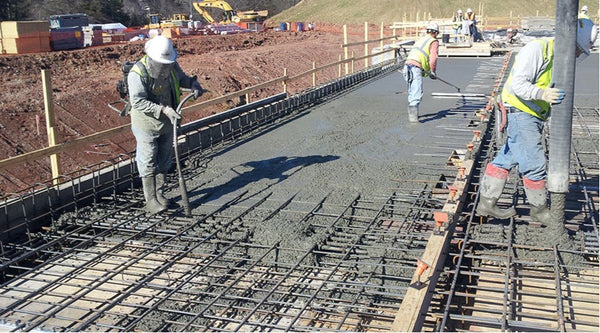
Construction works such as concrete mixing, curing, plastering, and masonry require water that meets specific quality standards. Good quality water ensures high strength, durability, and long life of the concrete structure.
Construction Water Quality Standards Table
| Parameter | Standard Value | Acceptable Limit | Remarks |
|---|---|---|---|
| pH | 6.0 – 8.5 | 6.0 – 9.0 | Water must be neutral to mildly alkaline. |
| Total Hardness | < 300 mg/L | Max 600 mg/L | High hardness affects setting time. |
| TDS | < 1500 mg/L | 2000 mg/L | High TDS affects strength of concrete. |
| Chlorides (as Cl) | < 500 mg/L | 1000 mg/L | Excess chloride causes corrosion of steel reinforcement. |
| Sulphates (as SO₄) | < 400 mg/L | 500 mg/L | High sulphates weaken concrete. |
| Alkalinity | < 200 mg/L | 300 mg/L | High alkalinity affects curing. |
| Organic Matter | < 200 mg/L | 300 mg/L | Organic impurities reduce strength. |
| Oil & Grease | < 10 mg/L | 20 mg/L | Oil reduces bonding of cement paste. |
| Suspended Solids | < 100 mg/L | 200 mg/L | Should be clear water; no turbidity. |
| Acidity | < 50 mg/L | 100 mg/L | Acidic water damages steel and cement. |
| Iron (Fe) | < 1 mg/L | 2 mg/L | Higher iron causes staining & weakens concrete. |
Why Good Water Quality is Important for Construction?
- Improves strength & durability of concrete.
- Prevents corrosion of reinforcing steel (TMT rods).
- Reduces cracking, scaling, and structural failure.
- Ensures smooth plastering and finishing.
- Increases building life by 20–30 years.
RRR Enviro Systems – Construction Water Treatment Solutions
We provide suitable treatment systems to meet BIS & IS 456 construction water standards:
- Pressure Sand Filters (PSF)
- Activated Carbon Filters (ACF)
- Iron Removal Filters
- Softener Plants
- TDS Reduction Systems
Contact for Water Testing & Treatment Plant Installation
📞 9710035249